I never thought my opinion of the news media could worsen, but 2008 proved me wrong. This has been one of the worst years for news coverage in recent history. In 2004, media outlets were literally "in the tank" with President Bush on the war. Critics of the war did not receive coverage or they were viciously shamed (think: BBC and Peter Jennings). This year, the media engaged in painfully awful "analysis." Here are some of the worst things, listed in no particular order:
Nipple-Gate: Obama goes topless in Hawaii; causes media meltdown.
Obama Girl: Why? Just why? I am stunned that this received any attention at all outside of Youtube, but I guess the corporate media are desperate for money.
Palin Baby Mama Drama: Daily Kos proves its influence by floating a rumor that spread like a virus -- with equally nauseating effects.
Palin Clothing Drama: Since the baby story did not work, let's create another "scandal." And make it sexist too! Yes, that will sell.
Hillary Clinton's alleged tear in New Hampshire: There are so many things I could say about the absolute immaturity and sexism surrounding the reporting of this issue. But I have already done enough.
Clinton Wants Obama assassinated: Poor Keith Olbermann has a stroke, having convinced himself to believe the lie.
Pro-Obama election coverage: Studies by the Pew Center, Rasmussen, the Washington Post, ABC News, and other outlets confirm that most media outlets were rooting heavily for Obama. Interestingly, a lot of Democrats do not want to admit or condemn this. Well, given the disastrous effects of an uncritical media (e.g. Bush's war), I think we need to reject this type of behavior.
Isms: The denial of sexism against Clinton was astonishing. The effort to turn every criticism of Obama into something racist or malicious was equally astonishing. I think racism and sexism explain both processes.
For more on this subject, I encourage readers to check out Glenn Greenwald's blog on Salon.Com. Warning: His sarcasm and cynicism rival my own!
Also, I have written extensively on the subject this year. Enjoy the links provided in the preceding analysis and the ones listed below.
Related Readings on Dissenting Justice:
Oy Vey: Liberals Dominate Media Because They Want to "Change the World," Says WaPo Ombudsman
2 Politico.Com Reporters Concede Media Biased, Blame McCain
ABC News Takes on Issue of Media Bias and Concludes: It Exists
Poll: 55% of Voters Believe Media More Biased Than in Past Elections
Washington Post Proclaims That "Sarah Palin Picks Ferraro as Favorite Vice President." Shocking -- Yes. Truthful -- No.
CNN and CBS Release Highly Misleading Polls Regarding VP Debate
On Low Roads and Hypocrisy: The Media, Sexism and Hillary Clinton
Another Study Proves That 1+1=2, Or That the Media Love Obama, Hate McCain/Palin, and Who's Biden?
Ombudsman Concludes that the Washington Post Was In the Tank!
12 Incredibly Lame News Stories That the Media Reported, Instead of the Impending Doom in Financial Markets
Showing posts with label presidential election. Show all posts
Showing posts with label presidential election. Show all posts
Saturday, December 27, 2008

Wednesday, October 29, 2008
Blacks Less Optimistic About a Coming Liberal Utopia
In a series a blog posts, I have criticized the idea that Obama's election and the expansion of Democratic control in Congress means that the nation has swung to the left and that the Democrats can use their power to implement a very liberal agenda (see these links: Democrats and Social Conservatism; Sober Look at a Democratic Sweep; and 2008 Is Not 1964). This argument overlooks: (1) the lack of a coherent liberal ideology among the new "Obama Generation" of voters; (2) the fact that McCain led Obama in many polls prior to the Wall Street implosion; (3) that Democrats have only won three presidential elections since 1964; (4) that even in blue states, like California, Democrats still embrace socially conservative agendas; and (5) many new Democrats in Congress will come from conservative states and have run on conservative political platforms.
I have also observed that most of the commentators I have noticed announcing the death of old white male heterosexual power are members of that very demographic. Women, people of color, gays and lesbians, and the poor are far more guarded about the prospect for sweeping change in the lives of disadvantaged people. A couple of news articles confirm (at least anecdotally) that people of color remain cautious in their optimism surrounding the election; many of them do not even want to allow themselves to believe that Obama will win, despite his lead in the polls. They certainly have not predicted that the nation has fundamentally rejected conservatism. For further analysis, see the following articles: New York Times and Dallas Morning News.
Wednesday, October 22, 2008
Joe Mo'? AP Poll Has Obama with Mere One-Point Lead; McCain Gains Sharply Among White Middle-Class Voters
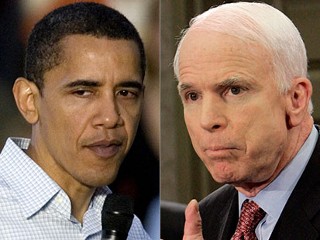
The Associated Press has released a stunning poll, which shows that McCain has closed the gap in the presidential race to a mere one point. Ever since the Lehman Bros. implosion, Obama has led in all major polls. But last week, many polls suggested that the race contracted a bit, although results from earlier this week again reflected a large lead for Obama. In addition to the close AP poll, today's GWU Battleground survey shows a two-point race. In most polls, however, Obama has a very comfortable lead.
In the AP poll, McCain's gains were primarily among white middle-class voters. Perhaps McCain is experiencing "Joe Mo'." But the presidential election is a state-to-state race, and a majority of the polls show Obama leading in most of the swing states. Despite Obama's persistent lead in the swing states, Democratic Governor Charles Rendell of Pennslvania has urged Obama to return to the state, along with Bill Clinton, and McCain has committed a lot of resources to winning Pennsylvania. These facts have caused some analysts to question whether the Hershey state is tighter than the polls demonstrate. Pennsylvania has voted for the Democratic contender in each election since 1988, but Kerry only won the state by 2.5% over President Bush. A surge of new Democratic registrants, however, bodes very well for Obama.
Saturday, October 18, 2008
Wall Street Journal Has Acute Democrat-Phobia: Opinion Piece Warns of Possible "Liberal Supermajority"
The possibility of a Democratic sweep, including a filibuster-proof Senate, makes the Wall Street Journal's editorial board afraid -- very afraid. In a recent opinion piece, the newspaper examines changes that it believes a Democratic "supermajority" would implement. I have listed some of the policies below, mixing in my own snide editorial comments!
(1) Before getting detailed, the essay warns that a Democratic sweep "would mark the restoration of the activist government that fell out of public favor in the 1970s."
(1) Before getting detailed, the essay warns that a Democratic sweep "would mark the restoration of the activist government that fell out of public favor in the 1970s."
Reaction: Which part of the 1960s should we fear? The enactment of the Voting(2) Medicare for all. The article points out that sneaky Democrats responded to the political defeat of "Hillarycare" by breaking it down into component parts, like Schip (State Children's Health Insurance Program). A liberal supermajority would "lay the final flagstones on the path to government-run health insurance from cradle to grave."
Rights Act, legislation banning race, sex, and national origin discrimination in
employment, or laws prohibiting racial discrimination in places of public
accommodation?
Reaction: "Government-run" health insurance? This is a mischaracterization of
Obama's health plan. Also, what chutzpah -- criticizing health care for indigent
kids!
(3) Green Revolution
Reaction: Personally, I do not fear having a healthy environment or stronger(4) "Free Speech and Voting Rights" (yes -- a quote!). Democrats would legislate "same-day" voter registration. "Acorn and the 'community organizer' left" support this. Also, DC residents would have representation in Congress. Plus felons would have the opportunity to vote.
efforts to make that a reality. What about you?
Reaction: I am not sure pure conservatives would oppose enlarging "free speech(5) "Special-interest potpourri" (my favorite heading in the essay). This section includes a laundry-list of feared policies, such as "intrusive regulation" of the Internet, the trial of "terrorists" in federal courts, watering down of "No Child Left Behind" standards, and the burdensome formation of new rights of action "sprinkled throughout legislation."
and voting rights." These rights strike at the heart of egalitarian democratic
participation. But the WSJ fears political participation by certain classes (felons, DC Democrats, who are largely black), not all. Also, several states -- red, blue, and purple -- now have same-day registration.
Reaction: Isn't No Child Left Behind watered-down by definition because it is
an unfunded mandate? Also, the lack of explicit "rights of actions" in some
federal legislation backfired on Republicans when the Supreme Court struck down
the injunction in the Ohio voter case. I really appreciate irony. Finally, the purpose of a criminal trial is to prosecute "suspected" terrorists (or other types of accused criminals). The assumption of guilt is probably the most loathsome and dangerous aspect of Bush's military tribunals. With all of the talk about "patriotism" we usually hear from conservatives, their willingness to abandon core American principles stated in the Bill of Rights sends a terribly mixed message. Conservative libertarians, however, value those rights. Ron Paul, for example, opposes the Patriot Act.
Wednesday, October 15, 2008
An Obama Presidency Would Cause the Death of Racism and the Civil Rights Movement, Says Alec Baldwin.

In addition to bringing about peace, changing the image of the United States across the world, and restoring economic greatness for the middle class, Obama's election would rid society of obstacles to racial equality -- at least according to actor-turned-sociologist Alec Baldwin. One of the primary reasons I started this blog was to respond to liberals idealizing Obama, particularly their belief that Obama's success means that contemporary American society has transcended race. It hasn't.
In a recent blog entry on HuffingtonPost, Baldwin welcomes an Obama victory and the social changes it would engender, including the "death" of the Civil Rights Movement and racial inequity:
[A] friend turned to me recently and said, "If Obama is elected, we will have witnessed something truly great in our lifetime." I agree. We will also witness, I would argue, the death of the civil rights movement as we have understood it these past sixty years. The last, great obstacle to meaningful racial equality in America will vanish, and with it, the yoke, real and perceived, of the limitations of the black experience in our country.
Baldwin suffers from a rather acute naivete concerning the state of contemporary race relations. I am certain that the 90% of black voters who will pick Obama on November 4 do not believe their votes will bring about the death of the Civil Rights Movement as "we" know it. Perhaps Baldwin should tell them to read the fine print on their ballots.
Many white liberals, including academics who conduct research on matters concerning social inequality, have expressed opinions like Baldwin's to me for a large part of this year. Their arguments led me to view their support of Obama with a great degree of suspicion. While the mainstream media spent a lot of time reporting that race influenced the votes of white conservative Democrats, who refused to vote for Obama, they neglected to examine the racial attitudes of liberal and leftist Democrats, for whom race also mattered, albeit in much more subtle and in nonracist ways. Many liberals prefer Obama in part because they want to make a positive statement about the status of race in contemporary American society; by voting for a "black man," they can absolve themselves of any lingering racial guilt that only a liberal could experience. Once they elect Obama, they can convince themselves that they have done all they need or can do to do to put race behind "us," which would allow them to feel comfortable in their own wealth and privilege. Obama outperformed Clinton by a healthy margin among wealthier, liberal whites.
But racial inequality will not vanish if Obama wins the election, and believing that his success would end racial injustice provides ammunition to political movements that oppose the implementation and enforcement of antidiscrimination measures. The great changes this country has made with respect to race, gender, sexual orientation, and poverty have only occurred because of social movement activity -- not from symbolic achievements. Many impoverished and racially isolated urban area in the United States have roads or schools named after Dr. Martin Luther King, Jr. and Malcolm X. Despite this, the areas remain places of concentrated poverty and blight. Obama's election -- absent any collective political action and policy reform -- will not change this scenario. I believe that symbols can inspire individuals to action, but symbols cannot do the hard work that produces meaningful change. Only collective and sustained action can engender justice. King used words and symbols to mobilize people against racism. But sit-ins, marches, litigation, parades, and peaceful assembly, not just symbols alone, helped transform American society. Baldwin and others who share his sentiment about race lack an understanding of the way in which social change happens.
One final note: the "beyond race" argument that Baldwin espouses has a long presence in American history. Immediately following the Civil War conservatives in Congress opposed legislation that would provide assistance to the former slaves (including shelter, food, governmental protection from racist mobs, and schools) on the grounds that the war accomplished the complete liberation and equality of blacks. After World War II, when opposition to eugenics and social Darwinism spiked (due in large part to the repudiation of Hitler), states began enacting civil rights legislation prohibiting racial discrimination in employment. Opponents argued that these measures were unnecessary because racism no longer existed. Apparently, it died in the war. And during the 1960s, opponents to federal antidiscrimination policies made the same arguments, resisting the Voting Rights Act, employment discrimination measures, and laws banning racism in places of public accommodation.
Today, the "post-race" argument has gained even more currency, and Obama's electoral success has enlivened its proponents. But polling data show a great racial divide on this issue. While whites tend to agree that society has dismantled racial barriers to advancement, people of color passionately believe that race remains socially relevant. Thus, when Baldwin says "we" will have a new understanding of race if Obama is elected, he is not speaking for most people of color. Perhaps Baldwin should audition for a new movie role. His stint at political blogging has started on very shaky ground.
PS: If this historical analysis interests you, please check out a forthcoming article entitled "Racial Exhaustion." You can read the abstract and download the full draft article here: Racial Exhaustion Link.
Monday, October 13, 2008
Say What? Obama and Bush Agree On 20 Major Issues, CNN Article Finds
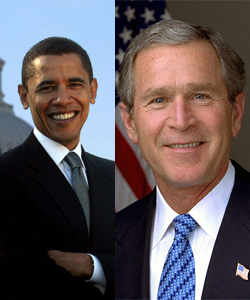
Tara Wall, a reporter for the Washington Times, has written an article for CNN (Wall is also a special correspondent for CNN) arguing that Obama and Bush have agreed on 20 major policy issues. Here's a link to the Wall's analysis. Among the areas of agreement, Wall lists:
* teaching abstinence to children
* capital punishment
* the bailout legislation and tax cuts (for 95% of the
population)
* Bush's energy bill
* faith-based initiatives (something Democrats
criticized)
* FISA (the legislation authorizing wiretapping, something he
previously opposed)
* opposition to same-sex marriage
* Supreme Court's ruling invalidating DC gun ban and finding
individual right to bear arms protected by constitution (many historians had argued that this was a right held by states - not individuals).
The problem with lists like this one is that they do not allow for nuance. The bailout legislation, for example, went through several changes before Congress approved it, and although Obama opposes same-sex marriage, he has not proposed a constitutional amendment banning it (like Bush did). But the list is interesting, and frankly, I'm surprised that it took this long for someone to analyze the ways in which Obama and Bush have agreed in the past. Interesting reading.
Sunday, October 12, 2008
Obama Allows Two "Racists" to Campaign for Him: Why?

During the Democratic primaries, the media, Obama's online supporters, and several of his surrogates accused Hillary and Bill Clinton of racism. Bill Clinton was racist for saying Obama's take on the war was a "fairytale." Hillary Clinton was racist for saying that it took a "president" to sign the Civil Rights Act of 1964. Even Clinton's "tear" in New Hampshire became a racist rallying cry.
Probably the worst moment happened when Senator Clinton responded to a reporter's question about her remaining in the race when it looked like she could not win. Clinton responded by noting the Robert Kennedy's assassination occurred in June and that the primaries were still ongoing at the time. The media turned that innocent comment into a death threat. Keith Olbermann was probably the most outlandish of all, producing an almost 30-minute blood-faced rant on how Clinton wanted someone to kill a black man. Oddly, the Democratic primaries turned so many people into purported advocates of racial equality. Olbermann, who works for lily-white MSNBC was all of a sudden concerned about the well being of "the" black man. Bless his heart. The Obama team circulated the Olbermann video across the web, fomenting the belief that Clinton was trying to instigate an assassination.
Anyway (some delayed venting), it seems that Bill Clinton has jumped on board (joining wife Hillary) and is now campaigning for Obama. Also, Obama apparently has recently mentioned that the economy was doing fine when Clinton was president. During the Democratic primaries, however, Obama withheld any praise of Clinton. Instead, he lumped President Clinton with the "past," which he derided as "more of the same" and "politics as usual." He even associated Clinton with the most hated Republican on earth -- George Bush, Jr. -- when he said that people were "bitter" because of both Bush and Clinton.
Do you think it is odd that a black presidential candidate would allow people whom the media, his supporters and his surrogates portrayed as racists to campaign for him? Does this mean that racism does not bother Obama or that he will tolerate racists if they can help get him elected? Or does this mean that the charges of racism against the Clintons were bogus at most, or overstated at the least? I'm scratching my head on this one (not really). Why aren't Huffington, Daily Kos, and Politico inflamed about two racists campaigning for Obama?
Friday, October 10, 2008
Blacks, the Poor, and Democrats Overwhelmingly Endorse McCain's Mortgage Plan

I have written a few entries on Senator John McCain's surprising proposal for a federal buyout of mortgages of distressed homeowners (see, e.g., here and here). Although the bailout legislation authorizes the Secretary of the Treasury to purchase individual mortgages, it is extremely light on details. McCain's plan fills in some of the blanks, but it has received harsh criticism from Senator Barack Obama and the media. Obama has not released an alternative plan.
Despite the cold reception from Obama and the media, "rank and file" Americans actually favor the plan -- particularly blacks, the poor, and Democrats! Rasmussen, the respected pollster, released a survey on this subject today. Here are some highlights:
Despite the cold reception from Obama and the media, "rank and file" Americans actually favor the plan -- particularly blacks, the poor, and Democrats! Rasmussen, the respected pollster, released a survey on this subject today. Here are some highlights:
* 52% of all voters favor the planWill these numbers convince McCain to keep pushing the plan? In an earlier entry, I argued that McCain could use his plan to demonstrate that he differs from Bush and that he can deliver concrete ideas, rather than simply criticism or slogans. The McCain campaign, however, seems tone deaf and unable to follow through with its narratives. Unless McCain stays the course with a working script, he will begin to come across as erratic, as Obama has described him.
* 59% of Democrats favor the plan, compared to 47% of Republicans
and 49% of Independents;
* 70% of African-Americans versus 50% of whites agree with the
plan.
McCain's Implosion: 7 Reasons Why His Campaign Is in Crisis
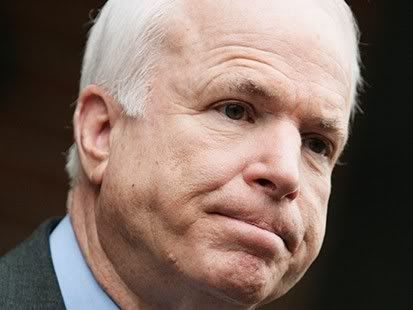
As the presidential election day approaches, the race continues to shift to Democrat Barack Obama. Although Obama has almost always led McCain, following the Republican National Convention, the polls shifted significantly to McCain. But the electoral landscape has abruptly changed in recent weeks. There are several factors that explain this transition, some of which McCain can control, others that he cannot. But overall, his campaign seems unable to create traction. Here's why things have gone bad for McCain.
1. Economy
Clearly the economy has had a tremendous -- if not the most -- impact upon his campaign. McCain was leading in the polls until several large financial institutions imploded. After that time, things began to favor Obama. Historically, voters blame incumbents for poor economic conditions, rightfully or wrongfully. And they are clearly blaming McCain and the Republicans for the current state of affairs. I think both parties share the blame for the credit crisis; FactCheck.Org agrees. McCain has not effectively communicated this.
2. Sarah Palin
Sarah Palin has also caused problems for McCain. Although her addition to the ticket initially invigorated McCain's campaign, subsequent poor performances during media interviews and also (probably overdone) negative scrutiny by the media turned her into a liability. Several conservative commentators demanded that McCain remove her from the ticket. Palin, however, was able to alleviate many concerns voters had with her candidacy with a good performance at the Vice Presidential debate. Her favorable numbers improved dramatically. Despite this, concerns linger.
3. Republican Exhaustion
Republican exhaustion can also account for McCain's bad luck. Party dominance is cyclical at the national level. The Republicans have dominated the White House since 1964 -- which started at 44-year stretch with only 16 years in which a Democrat occupied the White House. Obama's change theme works very well with party exhaustion, and McCain has been unable to revitalize interest in Republicans.
4. Forgoing "Experience" Argument
McCain's campaign has also failed to take advantage of a few opportunities to shift the electorate. First, by picking Palin he essentially removed the "experience" theme from his campaign, which gave his campaign a coherent narrative.
5. Failure to Distinguish Himself from Bush
McCain has also failed to show that he is not Bush III and that he is a "maverick." While many members of my party would say that's because he is Bush III, like most things in politics, it's all about a narrative. For example, McCain recently proposed a mortgage plan, which Obama and the media have bashed. But he could have at least used that moment to say that he, unlike Bush and many others in his party, knows that government has a role in helping society. He could have also said that he, unlike Bush, is not afraid to reconsider his opinions about the role of government in society. Instead, his plan lacks a marketing narrative at all. Obama's plans, on the other hand, always do. Aided by the media in large part, he announces a "major policy speech" on any given subject and grabs headlines. I do not agree with Obama that McCain is erratic, but I do believe that without a narrative, voters cannot connect his proposals.
McCain and the Republican leadership could have agreed that he would go after Bush on a few important policy areas on which he has disagreed with Bush (e.g., environmental policy, corporate ethical reform, campaign finance, etc.). Instead, he has been stunningly silent on the details of his "maverickness," which makes the whole them ineffective.
6. Failure to Question Obama, via Biden, on Iraq
Although the economy has for a long time overshadowed the Iraq War in importance to voters, Obama continues to say that McCain exercised bad judgment voting for the war. McCain has responded primarily by arguing that his support of the surge and continued funding of the troops demonstrates that he can win a war (unlike Obama or Bush). But McCain has not emphasized Joe Biden's vote on the war at all, which seems to call into question Obama's war critique. Although Palin accused Biden of waffling on the war during the Vice Presidential debate, when Obama said McCain's war vote reflected poor judgment during the second presidential debate, McCain failed to mention Biden's vote at all, squandering an opportunity to question the sincerity of Obama's war critique.
7. Embedded Media
Finally, the media have made it more difficult for McCain and easier for Obama. I am not saying that the media have thrown the election to Obama. But I am acknowledging that for the most part, coverage favors Obama more. This began during the primaries, and Tina Fey brought the issue to national attention. Keith Olbermann's blood-faced rants, Chris Matthews's "tingly thighs," and the legion of opinion writers in the major papers (e.g., E.J. Dionne, Frank Rich, Dana Milbank, Maureen Dowd, and Eugene Robinson) who churned out weekly pro-Obama essays most likely helped shape public opinion regarding Obama. I am not saying that he does not deserve a great reputation, but that free publicity from authoritative media goes a long way towards constructing a positive image. By contrast, a litany of negative press (from these same influential media sources) can damage a candidate's reputation among voters.
The recent scuffle over McCain's mortgage plan provides a good example of likely media bias. The media have intensely scrutinized the plan -- as they should -- but they have primarily just reported Obama's objections to the plan. More importantly, they have not asked Obama what he would do to fix the problem. During the bailout discussions, the media questioned whether McCain had a plan or a role in the negotiations. The bailout actually authorizes the Secretary of the Treasury to purchase individual mortgages, but leaves it to the Secretary to devise a method for valuing the mortgages and assisting homeowners. McCain has at least given us a window into what he would do -- whether this is purely political or otherwise. Obama has not, and the media have not demanded that he do so. I also don't recall the media inquiring about Obama's role in the bailout negotiations.
This is not the first election in which the media have shown a candidate preference. They turned Gore into a laughingstock -- ridiculing him for "gaffes" that upon further examination, weren't gaffes at all. During my youth, they loved Reagan (the "Great Communicator") and bashed Carter on the economy and Iran, although much of the economic peril in the country resulted from factors outside of the control of the president, like the very dramatic (and almost overnight) increase in the price of oil. They never challenged voters on the relevance of Dukakis looking goofy in an Army tank and his ability to govern the nation. And beyond election campaigns, the media were literally "in the tank" with the White House during the Iraq War. If the media can embed themselves with the Bush administration to clamor for access, why wouldn't they do the same during a political campaign?
Can He Do It?
The odds are stacked against McCain at the moment, but some commentators say that he could still pull off a comeback. I am not convinced. I do not see an effective strategy by McCain, and I am not sure what he could do to neutralize the media. Calling them out as biased seems to have made them worse.
1. Economy
Clearly the economy has had a tremendous -- if not the most -- impact upon his campaign. McCain was leading in the polls until several large financial institutions imploded. After that time, things began to favor Obama. Historically, voters blame incumbents for poor economic conditions, rightfully or wrongfully. And they are clearly blaming McCain and the Republicans for the current state of affairs. I think both parties share the blame for the credit crisis; FactCheck.Org agrees. McCain has not effectively communicated this.
2. Sarah Palin
Sarah Palin has also caused problems for McCain. Although her addition to the ticket initially invigorated McCain's campaign, subsequent poor performances during media interviews and also (probably overdone) negative scrutiny by the media turned her into a liability. Several conservative commentators demanded that McCain remove her from the ticket. Palin, however, was able to alleviate many concerns voters had with her candidacy with a good performance at the Vice Presidential debate. Her favorable numbers improved dramatically. Despite this, concerns linger.
3. Republican Exhaustion
Republican exhaustion can also account for McCain's bad luck. Party dominance is cyclical at the national level. The Republicans have dominated the White House since 1964 -- which started at 44-year stretch with only 16 years in which a Democrat occupied the White House. Obama's change theme works very well with party exhaustion, and McCain has been unable to revitalize interest in Republicans.
4. Forgoing "Experience" Argument
McCain's campaign has also failed to take advantage of a few opportunities to shift the electorate. First, by picking Palin he essentially removed the "experience" theme from his campaign, which gave his campaign a coherent narrative.
5. Failure to Distinguish Himself from Bush
McCain has also failed to show that he is not Bush III and that he is a "maverick." While many members of my party would say that's because he is Bush III, like most things in politics, it's all about a narrative. For example, McCain recently proposed a mortgage plan, which Obama and the media have bashed. But he could have at least used that moment to say that he, unlike Bush and many others in his party, knows that government has a role in helping society. He could have also said that he, unlike Bush, is not afraid to reconsider his opinions about the role of government in society. Instead, his plan lacks a marketing narrative at all. Obama's plans, on the other hand, always do. Aided by the media in large part, he announces a "major policy speech" on any given subject and grabs headlines. I do not agree with Obama that McCain is erratic, but I do believe that without a narrative, voters cannot connect his proposals.
McCain and the Republican leadership could have agreed that he would go after Bush on a few important policy areas on which he has disagreed with Bush (e.g., environmental policy, corporate ethical reform, campaign finance, etc.). Instead, he has been stunningly silent on the details of his "maverickness," which makes the whole them ineffective.
6. Failure to Question Obama, via Biden, on Iraq
Although the economy has for a long time overshadowed the Iraq War in importance to voters, Obama continues to say that McCain exercised bad judgment voting for the war. McCain has responded primarily by arguing that his support of the surge and continued funding of the troops demonstrates that he can win a war (unlike Obama or Bush). But McCain has not emphasized Joe Biden's vote on the war at all, which seems to call into question Obama's war critique. Although Palin accused Biden of waffling on the war during the Vice Presidential debate, when Obama said McCain's war vote reflected poor judgment during the second presidential debate, McCain failed to mention Biden's vote at all, squandering an opportunity to question the sincerity of Obama's war critique.
7. Embedded Media
Finally, the media have made it more difficult for McCain and easier for Obama. I am not saying that the media have thrown the election to Obama. But I am acknowledging that for the most part, coverage favors Obama more. This began during the primaries, and Tina Fey brought the issue to national attention. Keith Olbermann's blood-faced rants, Chris Matthews's "tingly thighs," and the legion of opinion writers in the major papers (e.g., E.J. Dionne, Frank Rich, Dana Milbank, Maureen Dowd, and Eugene Robinson) who churned out weekly pro-Obama essays most likely helped shape public opinion regarding Obama. I am not saying that he does not deserve a great reputation, but that free publicity from authoritative media goes a long way towards constructing a positive image. By contrast, a litany of negative press (from these same influential media sources) can damage a candidate's reputation among voters.
The recent scuffle over McCain's mortgage plan provides a good example of likely media bias. The media have intensely scrutinized the plan -- as they should -- but they have primarily just reported Obama's objections to the plan. More importantly, they have not asked Obama what he would do to fix the problem. During the bailout discussions, the media questioned whether McCain had a plan or a role in the negotiations. The bailout actually authorizes the Secretary of the Treasury to purchase individual mortgages, but leaves it to the Secretary to devise a method for valuing the mortgages and assisting homeowners. McCain has at least given us a window into what he would do -- whether this is purely political or otherwise. Obama has not, and the media have not demanded that he do so. I also don't recall the media inquiring about Obama's role in the bailout negotiations.
This is not the first election in which the media have shown a candidate preference. They turned Gore into a laughingstock -- ridiculing him for "gaffes" that upon further examination, weren't gaffes at all. During my youth, they loved Reagan (the "Great Communicator") and bashed Carter on the economy and Iran, although much of the economic peril in the country resulted from factors outside of the control of the president, like the very dramatic (and almost overnight) increase in the price of oil. They never challenged voters on the relevance of Dukakis looking goofy in an Army tank and his ability to govern the nation. And beyond election campaigns, the media were literally "in the tank" with the White House during the Iraq War. If the media can embed themselves with the Bush administration to clamor for access, why wouldn't they do the same during a political campaign?
Can He Do It?
The odds are stacked against McCain at the moment, but some commentators say that he could still pull off a comeback. I am not convinced. I do not see an effective strategy by McCain, and I am not sure what he could do to neutralize the media. Calling them out as biased seems to have made them worse.
Thursday, October 9, 2008
Enough Criticism, Senator Obama. Where Is Your Plan to Help Homeowners?

Today, just about every major media outlet and blog deeply scrutinized Senator John McCain's stunning proposal to commit federal funding to purchase mortgages of distressed homeowners and reissue them with more favorable terms. McCain, who admitted borrowing the idea from Senator Hillary Clinton, has altered the plan somewhat during the day, but it remains the only standing plan among the two candidates that details a strategy for providing direct assistance to homeowners.
McCain's plan certainly deserves scrutiny. First, it seems like a calculated political ploy designed to grab voters who are not sold on his ability to manage the economy. Second, there are legitimate valuation and feasibility issues that cloud the plan. Accordingly, I am happy to see specialists examine the fine print.
I am shocked, however, that the media have not asked the following question of Obama: Senator Obama, where is your plan? Today, Obama, armed with press accounts, came out swinging hard against McCain's plan. He did not, however, offer an alternative approach. This is surprising because one of Obama's most salient messages during the recent economic upheaval is that he, not McCain, understands the economy, will bring change from the last eight years, and would protect the middle-class. He even lambasted McCain for not specifically saying "middle-class" during the first presidential debate. Yet, his campaign has not designed a mortgage plan for distressed homeowners. Liberals and progressives should demand more. Saying middle-class does not pay the mortgage.
We should definitely want more details from Obama in light of the fact that:
1. He voted for the bailout legislation which actually authorizes the federal government to purchase individual mortgages and minimize foreclosures. The statute, however, is extremely light and vague when it comes to homeowner relief. It is almost exclusively aimed at providing relief to companies. Essentially, Congress has delegated authority to the executive branch to promulgate rules for helping homeowners. Accordingly, I would like to see how both candidates would "fill in the blanks."
2. Obama is rightfully concerned with the cost of McCain's plan. But Obama voted for the bailout legislation, which leaves it to the Secretary of Treasury to determine how to value assets the government purchases under the plan. Accordingly, I would like to see how an Obama administration would value these assets and how the terms of a reissued mortgage would look. Right now, I assume that Obama would not pay full value for the mortgages and then reissue them at the current, depreciated market value. Beyond that, he has not specified what he would do. Regardless of the merits of his plan, McCain has put the cards on the table. I commend McCain for doing this, even though I do not share his political ideology and even though I'm convinced that this is a political tactic.
I am not a Republican, and my political leanings are much more in sync with the Democrats, than the Republicans. Nevertheless, I want my party's candidate to create a specific plan for homeowners, rather than simply criticize McCain on this important issue. More importantly, I want the media to ask tough questions of both candidates. Candidates have no incentive to answer questions not asked of them. So unless the big networks take on this issue we will only hear from McCain, who had to do something to get voters' attention. My cynical side tells me that McCain is just playing politics, and my understanding of economics leads me to question its feasibility, but at least it's a plan. That must count for something, right?
Tuesday, October 7, 2008
Keating and Ayers: The Campaigns Go Postal!
If the past weekend was a preview of coming attractions, then the next month should provide a lot of sleazy political drama. Both campaigns have "gone postal" (I prefer this to the term "nuclear"), and the amorphous but omnipresent "character" issue has been thrust into the election.
McCain, dropping rapidly in the polls, first launched the attack, by having Sarah Palin bring up Obama's "connection" to Bill Ayers, a former political radical who admitted bombing several governmental offices during the 1970s. Ayers is now a Distinguished Professor at the University of Illinois at Chicago. Amazing turnaround. I wonder (not really) why more 1960s black radicals did not pursue jobs as tenured (not to mention "distinguished") professors. It's such a wonderful life.
Obama replied to the Ayers slam by airing a 16-minuite (wow) commercial on McCain's involvement in the Keating 5 - a group of 5 Senators charged with attempting to abort a federal investigation of the Lincoln Savings and Loan Association. McCain was cleared of any misconduct, but others in the group were found to have behaved improperly.
Obama says that McCain has gone postal out of desperation, but I suspect that this was a strategy that had already been plotted and saved for the final stretch. I also suspect that Obama's 16-minute video about the Keating scandal was not produced over the weekend. But why would candidates who both decry "the politics of personal assassination" resort to negative campaigning? Simple: It works! Although opinion polls show that voters loathe negative advertising, opinion polls also show that this type of campaigning actually influences voters' decisions. Basically, the studies prove that voters are hypocritical -- as if we needed polling data to demonstrate this.
As much as the public says that Britney Spears and Paris Hilton are disgustingly tragic, the two remain among the most searched figures on the Internet. The country apparently has a love-hate relationship with sensationalism and trashy public sagas. Why else would the National Enquirer and other tabloids have such longevity? If Americans did not enjoy public emotional dramas, then they would not have paid so much attention to Elian Gonzales, Anna Nicole Smith, Waco, Texas, Terry Schiavo, the Polygamist Compound, Michael Jackson's child molestation trial, and the many other national sagas that have originated in Florida, Texas, and California.
So, I encourage the voters to buckle up. This is the moment you have been waiting for -- yet vehemently criticizing. Let the mudslinging begin. You can clean yourselves later.
Thursday, October 2, 2008
Like a Moose Caught in the Headlights? How Will Sarah Palin Do Tonight?

The stakes for tonight's Vice Presidential debate are higher than in the average election. Most opinion polls show that vice presidential candidates usually do not significantly influence the final decisions of voters. Conventional wisdom, however, has not always proven helpful this year.
Initially, John McCain's selection of the virtually unknown and underexperienced Palin brought excitement to his campaign. The conservative base of the Republican party rallied around the ticket, GOP fundraising spiked, and Barack Obama's continual lead in the polls evaporated. Republicans proclaimed that the "Mac was back."
Well, after a series of underwhelming media performances, the luster around Sara Palin is beginning to wear thin. Some conservatives have openly called for McCain to drop her from the ticket. Democrats and late night television have had lots of fun at her expense. McCain now trails in the polls, and voters are not convinced that Palin is qualified to serve as Vice President (and certainly not President -- if the need arose).
So, with all of these developments, tonight's debate is critical for McCain's candidacy. The Obama team has played the typical expectations game, incredulously calling Palin a "terrific debater." Palin has responded in kind saying that Biden is a "great debater." But the edge certainly would go to Biden, given his experience in politics and his comfort with and history of engaging the media.
But Biden should not tread lightly. Many commentators have argued that Biden should not debate Palin too forcefully, lest he appear sexist. But the opposite -- debating lightly -- is sexist. It lowers the bar for a woman. It demonstrates that we should not expect much from women in terms of politics and intellect. Biden should give Palin the grace and respect due any other candidate.
I had similar thoughts during the Democratic primaries when many people passionately (if not neurotically) attempted to shield Obama from even the slightest criticism and distorted the harshness of critiques he received. Many of the arguments that Clinton made during the primaries were typical fodder for elections -- not a violent throwing of the "kitchen sink" or kneecpapping" of a candidate, as many Obama supporters described them. This type of paternalism benefits no one. And it certainly is not antiracist or antisexist.
Based on her interviews with Katie Couric and Charles Gibson, Palin has a tough road ahead. In the best light, Palin's lackluster performances likely result, in part, from her relative newness to the national press -- one that is usually tough during campaigns (probably even tougher with Republicans this year). Her inexperience may make her come across as did James Stockdale, Ross Perot's running mate in 1992. Stockdale, like Perot, had absolutely no experience in politics, but he lacked the charm and charisma of his running mate. His performance during the debate that year was such a disaster that even Dan Quayle emerged looking sophisticated. At one moment, Stockdale told the moderator to repeat a question because he neglected to turn on his hearing aid. It was a mess.
Experienced politicians -- experienced speakers generally -- know how to appear polished; they know how to evade answers, but still give something coherent to listeners; they know how to come across smart or just competent, even when they are completely unprepared. Palin does not have the level of experience on the national stage -- or in politics -- to give her advantages in this area. Coupled with her lack of knowledge of many national and international issues, her performance could destroy McCain's campaign.
Despite her lack of experience and credible political background, one should not count out Palin. I have watched footage of her in prior media interviews (before her vice presidential campaign), and she came across as very poised and knowledgeable. Granted, many of the topics related to Alaska-specific concerns such as state energy policy, in which she is well versed. Nevertheless, she was not stuttering and lost for words. She had a script, but she could deviate from it and offer deeper answers. She seemed sufficiently polished. Also, Palin excellently delivered her speech (admittedly scripted) at the Republican National Convention. If she is "on" tonight, she could help revitalize McCain's sagging campaign and reassure voters. Because the economy has probably done more damage to McCain's campaign than anything else, the current lead by Obama could easily dissipate if Palin can renew excitement in McCain's candidacy.
Many Republican operatives have blamed Palin's poor performances of late on her "handlers." They say that McCain's team has tried too hard to script her and to keep her narrowly tied to the talking points. They say that it is not her nature to speak in that fashion and that, as a result, she comes across as someone who is simply regurgitating materials and who is unable to offer any extemporaneous insights. According to some reports, McCain has assembled a new team for tonight's debate, and the word among "insiders" (unnamed, of course) is that a new Palin will emerge tonight. Although one has to consider the source of these proclamations, Palin's recent interviews do not come close to matching her performance in media appearances during her time in Alaska politics. But despite its proximity to Russia, Alaska politics does not involve foreign policy, and it has not exposed her to some of the important national issues (like the deficit) that a president encounters (due to its energy deposits, Alaska typically has a budget surplus). Nonetheless, I would not rush to conclude that this debate is a slam-dunk for Biden (who has his own issue with "gaffes"). Whatever the outcome, this one should prove very interesting, given the high stakes and uncertainty.
Tuesday, September 30, 2008
Does Biden Have a "Sniper" Issue?
Does Senator Joe Biden have a sniper issue? During the Democratic primaries, Senator Hillary Clinton became the laughingstock on nighttime and daytime television, "liberal" blogs, and among Obama supporters for falsely claiming that she was subject to sniper fire during a trip to Bosnia as "First Lady." Apparently, Joe Biden may have his own snipergate (look here and here), but so far it has not brought Democrats or the media to a lather.
While he was still a presidential candidate, Biden said during one of the debates that he had been "shot at" in Iraq, a statement he now disclaims. And recently, Biden similarly "mispoke" by stating that a helicopter carrying him, other senators, and a "three-star general" was "forced down" in the "superhighway of terror between Pakistan and Afghanistan." The helicopter was indeed forced down -- due to a snowstorm, not a terrorist attack. Granted, Biden never claims that terrorism forced the helicpter down, but he never says that inclemanet weather required it to land either. Within the context of his statement, this omission leaves the impression that something sinister occurred.
I have long argued that Clinton received unequal treatment by some Democrats and (especially) the media during the Democratic primaries. This provides more evidence of my conclusion, which many others share. Yet, at the same time, I do not believe that distractions like this should have relevance in an election. But for Clinton, "snipergate" proved to many who already opposed her that she was unfit for president and even mentally unstable. I seriously doubt that anyone will make such claims about Senator Biden.
PS: Biden also voted for the Iraq War, but during the primaries, Senator Barack Obama said that Clinton's war vote showed a "lack of judgment." Obama also grilled Clinton on NAFTA and the pro-business bankruptcy reform legislation, but Biden voted for both laws. Clinton, of course, could not vote for NAFTA because she was First Lady at the time the legislation passed.
While he was still a presidential candidate, Biden said during one of the debates that he had been "shot at" in Iraq, a statement he now disclaims. And recently, Biden similarly "mispoke" by stating that a helicopter carrying him, other senators, and a "three-star general" was "forced down" in the "superhighway of terror between Pakistan and Afghanistan." The helicopter was indeed forced down -- due to a snowstorm, not a terrorist attack. Granted, Biden never claims that terrorism forced the helicpter down, but he never says that inclemanet weather required it to land either. Within the context of his statement, this omission leaves the impression that something sinister occurred.
I have long argued that Clinton received unequal treatment by some Democrats and (especially) the media during the Democratic primaries. This provides more evidence of my conclusion, which many others share. Yet, at the same time, I do not believe that distractions like this should have relevance in an election. But for Clinton, "snipergate" proved to many who already opposed her that she was unfit for president and even mentally unstable. I seriously doubt that anyone will make such claims about Senator Biden.
PS: Biden also voted for the Iraq War, but during the primaries, Senator Barack Obama said that Clinton's war vote showed a "lack of judgment." Obama also grilled Clinton on NAFTA and the pro-business bankruptcy reform legislation, but Biden voted for both laws. Clinton, of course, could not vote for NAFTA because she was First Lady at the time the legislation passed.
Subscribe to:
Posts (Atom)